
MC Pao. Anatomy of an attention heist.
Published: September 05, 2026 | Read Time: 9 min read | Category: Public figures
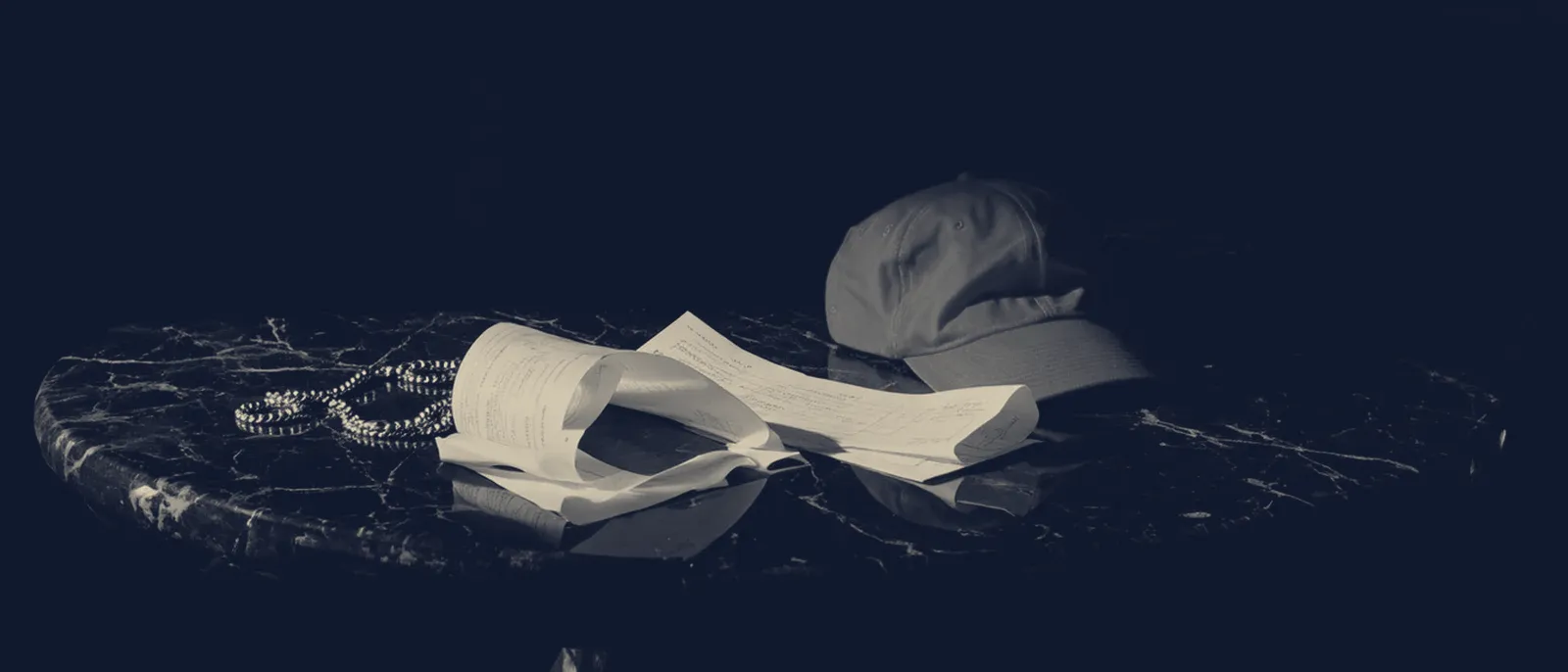
On 1 September 2026, on the set of "Tout beau, tout n9uf" on W9, a 37-year-old Italian declared himself worth between €900m and €1.2bn. A few days earlier, a Chrome Hearts receipt for €104,960, filmed in Cannes, had been passing without pause from one feed to the next. The French public thus discovered MC Pao, his red cap and his AI-generated music videos, and promptly filed him among the idle heirs who clutter social media. That reading misjudges both the man and the method.
IThe person behind the character
For almost thirteen years Paolo Rotelli chaired Italy's largest private hospital group. In July 2013, aged 24, he took over Gruppo San Donato on the death of his father, Giuseppe, who had founded it; a handwritten will dated 25 February 2013 named the three children universal heirs in equal shares. Under his chairmanship, shared from 2019 with Kamel Ghribi, revenue rose from €1.3bn in 2013 to €2.7bn in 2025.
On 3 May 2026 he announced his resignation from all his posts, saying he wished to keep the group's image apart from the artist's. The musical project predates the announcement by more than three years: sessions were held at Paramount studios in October 2022, a label, TractoLabel, was set up, and "Jugement dernier", his joint album with the rapper Alkpote, came out on 6 May 2026, three days after the resignation.
He sets out the economics of the project himself, €100,000 to €300,000 per artist, and names its limit: "at worst, it'll be patronage". When a businessman of this stature treats profitability as optional, the project serves other ends, and he has stated the principle: "the character, not the person".
IIThe influ-thief in reverse
For ten years, wealth flaunted online served as a sales funnel. Rented Lamborghinis in the shop window concealed trading courses, dropshipping, dubious investments and plain scams, and the "influ-thieves" lived off their followers' money. The model collapsed under lawsuits, regulation and the weariness of a public that eventually learned to spot the funnel before stepping into it.
MC Pao does the exact opposite. His fortune is real, and it can be checked in the accounts of a hospital group. He sells nothing to those who follow him, no courses, no paid community, no exclusive content, and the money flows the other way: "I've handed out €400,000 to my community". Facing a generation immune to sales funnels, he captures attention without reaching for the wallet, and that inversion alone is what sets him apart.
IIIThe Booba lever
For fifteen years Booba has played a double role in French rap. He is the master of the clash, that machine for manufacturing fame, and the self-appointed sheriff of authenticity; his whole reading of the scene rests on the line between real and fake, between real money and rented scenery.
MC Pao turns that reading against its owner. By going after Booba, first with repeated provocation, then with an outright challenge, he wins a mention, the one thing money cannot buy, and a large share of rap fans hear his stage name for the first time at the moment Booba answers him.
The asymmetry makes the operation impossible to lose. In a clash, Booba stakes his catalogue, his credibility and his rank; MC Pao stakes nothing, having no discography to defend and no legitimacy to lose, and he fields an overwhelming fortune that shows up in the accounts. The test of real and fake has no grip on the man who is, quite literally, the richer of the two. By responding, Booba certifies the status he thought he was mocking.
"The character, not the person."
Paolo Rotelli, May 2026IVWhat worked
Separating the assets before going public. He resigns and makes it known; from then on the red cap costs the hospital empire nothing.
Positioning by inversion. In a market where trust had collapsed, he offers the one good nobody was offering any more: wealth that asks nothing of the public.
The asymmetric clash. He provokes the one figure whose mention amounts to a certificate, in a set-up where he has nothing to lose.
The immediate move to television. A few weeks separate TikTok from the studio: a guest of the TV host Cyril Hanouna on 1 September, he is announced as a panellist on the show the following week, and fickle attention hardens into a weekly appointment.
Candour as a shield. By spelling out the method himself, the character distinct from the person, patronage as the worst case, he leaves the charge of manipulation with nothing to bite on.
VThe mistakes
The music barely converts. The label tops out at around 75,000 monthly listeners on Spotify, while the conversation about the character runs to millions of views. Attention does not trickle down to the product, and the character carries the whole edifice alone.
A political persona, written by the other side. The magazine L'ADN set the frame, a Trumpian spirit and a libertarian culture war, using material the project had supplied itself: the biography "Making Riviera Great Again", Ursula von der Leyen as a vampire in "Vampaieur", lyrics against taxation. Having failed to state his own frame before the attack, MC Pao is stuck with the magazine's.
The character's canon, left unguarded. AI-generated parodies circulate as fact. The confusion widens his audience in the short term, and a falsehood taken at face value is almost never corrected.
The pressure on Booba, slipping into earnest. Promising a concert in Miami under armed protection is standard clash fare, and the self-mockery gets lost along the way.
VIWhat is missing
An audience of his own. Everything is rented: TikTok's algorithm, the X feed, the W9 set. He owns no newsletter, no app, no closed community; the day the platforms delist the character, nothing of it will remain.
A second act. Displays of wealth wear out in seventy-two-hour cycles, and his has been running for four months on the same springs: the fortune, the receipt, the cash handouts. Without a cause, a project or a lasting adversary, the attention curve will come down the way it went up.
Legitimate cultural allies. An album with Alkpote and paid placements are no substitute. The scene rejects him, and no leading artist has tied their name to his except for a fee. Without a hit of his own or the backing of a peer, he remains a customer of the field rather than a player in it.
A visible organisation. A university friend and a label in Monaco do not turn attention into an organisation. He has no identifiable editorial team, no head of communications, no format of his own, and the machine rests on one man and on improvisation.
VIIThe turn of 3 and 4 September
On 3 September MC Pao appeared at the Forum BFMTV as a billionaire rather than a rapper. Armed with a tax argument, he put the VAT on a €200,000 restaurant bill at €40,000, "or 80 RSA", eighty monthly payments of France's minimum-income benefit, then declared: "without billionaires, you wouldn't have all the essential services that keep you comfortable". The clip passed four million views. Here was an heir defending, figures in hand, trickle-down through lavish spending; in doing so he stepped out of entertainment.
The counter-attack took shape within twenty-four hours, and it changed in kind. Rappers gave way to figures from public debate, each on his own ground. The physician Jérôme Marty led the most dangerous attack: the Rotelli fortune comes from private healthcare, from a group that has historically drawn about 80% of its revenue from the Italian public system; "how can a system funded by national solidarity produce such private fortunes?", he asked. L'Humanité, the communist daily, denounced the appropriation of rap; columnists rejected the merit an heir claimed for himself over managers better qualified than he is; rap accounts saw a cultural betrayal; and the digital archaeology began at last, bringing back an old X account that followed far-right figures.
From then on the debate turned on where his money came from, what he stood for and who had let him in. Self-mockery, enough to face the artistic charge sheet, has no answer to a tax indictment built on public health, and the character made for the celebrity sphere entered the political sphere for the first time.
VIIIThe glass ceiling
The first ceiling is structural. MC Pao occupies the second threshold of our doctrine, that of national fame and commercial bankability, without holding the first, professional performance conferred by the endorsement of peers. His performance capital is close to nil, and the specialist press agrees. He can stay in rap for as long as he pays for it; without that recognition, he will not reach the higher threshold.
The second ceiling is the step he does not climb. On the seven-step ladder that turns attention into power, he has climbed the first three, volume, recognition and meaning, that of the rich man who asks for nothing; the fourth, trust, builds as the fortune is verified. The fifth, where the public buys, turns up or takes his side, remains empty: millions of views for 75,000 listeners. He has won his first response, a panellist's seat on Hanouna's show, and nothing beyond it.
The third ceiling is moral licence. Generational movements feed on grievance. A happy heir handing out banknotes draws spectators, and he lacks the grievance that would turn them into activists. To break through this ceiling he would have to politicise his character in earnest, and the Forum BFMTV showed him the cost: the counter-attack goes after the licence, the source of the fortune, Italian solidarity, the digital past. If the moral licence breaks, the commercial value of the character freezes with it. Self-mockery makes him unassailable and stops him converting attention; he has yet to choose between the two.
The fourth ceiling is geographical. The method is purely French: a character built on Hanouna, on Booba and on attacks on European taxation does not travel. Italy, where the surname calls hospitals to mind, is probably closed to him. The cultural threshold demands a record that reads the same in every language, answer engines included; across the border, his becomes once more the story of a hospital heir.
IXOur view
The masterstroke is behind him. In four months, without buying advertising and without selling anything, he has settled into the feeds, the TV studios and public debate, with Booba as his ramp and the graveyard of the influ-thieves as his pedestal. Few recent image operations match this clean an execution.
What comes next turns on converting attention into influence. The first is a flow, which the algorithm takes back as fast as it gives; the second is a stock, the capacity to make people think, act and vote.
Five signals would mark the conversion: an audience of his own off the platforms, a format he produces and controls beyond his seat on Hanouna's show, a community mobilised around something other than tracks, physical gatherings, a message that commits to a line. As long as none lights up, he holds celebrity; the day one of them does, he will hold influence, and the four ceilings will become his real limits.
He may be acting out of passion. But a man who separates his image from the group's before putting on the red cap, who puts a figure on his patronage, who calls his character "the character" and who has grasped that fame comes from drawing a reply from the sheriff understands the economics of attention; he is playing it several moves ahead.
This judgement remains open to revision; the five signals will settle it in the coming months, and we will be watching them.
Translated from the French. Read the original.